

There are few places where nature feels as interwoven with everyday life as it does in Sri Lanka. This teardrop-shaped island in the Indian Ocean holds a remarkable diversity within its modest size, from dry-zone scrub and tangled rainforest to shimmering lagoons and rolling grasslands. It’s a land where elephants still wander ancient tank shores built by kings, where leopards move like shadows through sun-bleached bush, and where flamingos turn entire lagoons blush-pink at dawn.
Exploring Sri Lanka’s national parks isn’t just about wildlife spotting, it’s about entering landscapes shaped by centuries of harmony between people, water and wilderness. Here are five of the island’s best natural parks, each with its own exceptional highlight.
Yala National Park: Best for Leopard Spotting
Covering 979 square km (378 square miles) of the southeast corner of Sri Lanka, Yala National Park’s dry monsoon forest, sweeping stretches of savannah and remote lagoons are broken up by coastal dunes and peppered with dramatic rocky outcrops and thorn scrubs. It’s the second largest national park in the country, and by far the most visited, with its far-reaching, open scenery feeling enticingly like stretches of African bush.
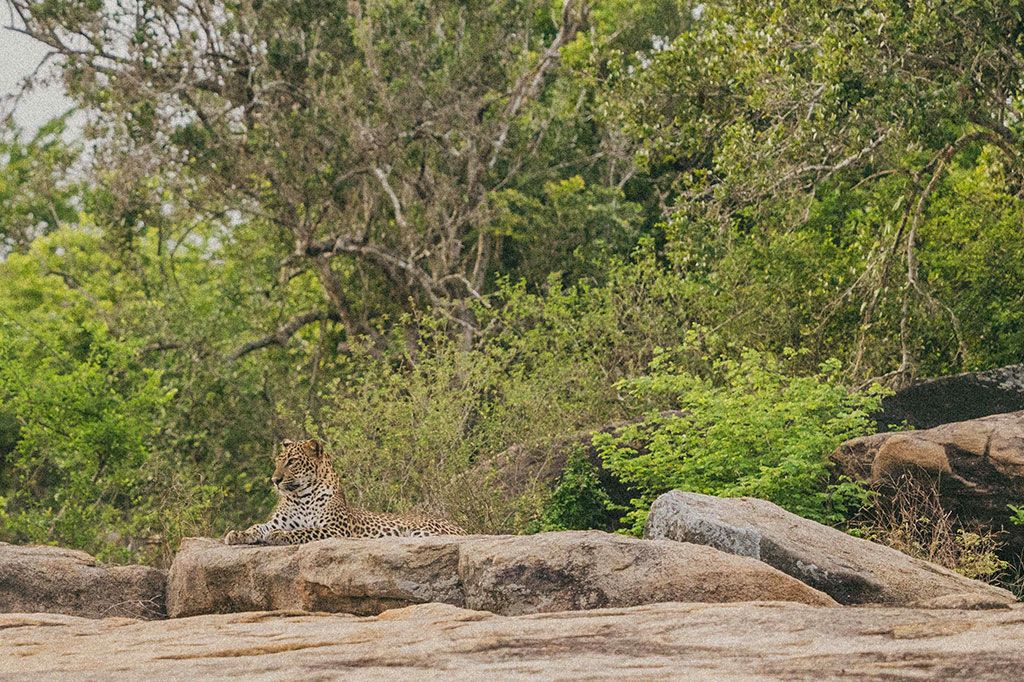
Leopards are Yala’s biggest draw, the park boasts the world’s highest leopard density, but that’s not to say they are easy to find. Taking a guided game drive with a local expert naturalist will increase your chance of spotting one, with the rangers able to share individual knowledge about every animal that you see.
Alongside leopards you’ll find Asian elephants, sloth bears, sambar deer, rare wild water buffalo and mugger crocodiles, and be serenaded by over 200 bird species including peacocks, eagles and bee-eaters.
Minneriya National Park: Best for Elephant Gatherings
Between 276-303 CE, King Mahasena I of Anuradhapura built a vast dam across the seasonal Minneriya Oya river and created the Minneriya Tank (reservoir) deep in the central dry zone of northern Sri Lanka. It formed a vital part of the ancient irrigation system and today, over seventeen centuries later, it’s the centerpiece for Minneriya National Park.
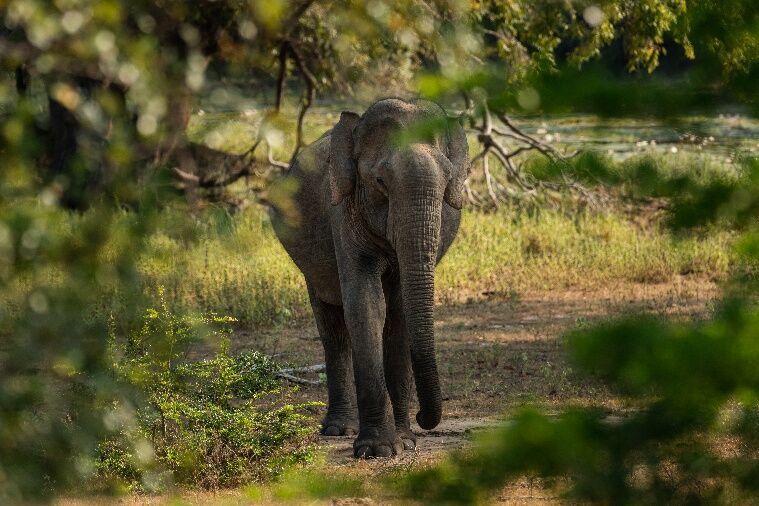
The tank’s verdant grassy shores attract the seasonal ‘Gathering’ of up to 400 elephants throughout the dry season. Thought to be the largest annual grouping of Asian elephants in the world, a safari drive here will enable you to spend time among these giants, watching baby elephants cavorting alongside gently guiding matriarchs and titan-like bulls scuffling for supremacy.
The park’s dry evergreen forest, grasslands and wetlands also attract axis deer, purple-faced langurs and jackals as well as a plethora of waterfowl and migrant birdlife. The national park’s central location makes for a fantastic combination with visits to the nearby ancient cities of Polonnaruwa and Anuradhapura as well as the rock fortress of Sigirya.
Wilpattu National Park: Best for Wilderness, Sloth Bears & Solitude
Often referred to as ‘the most beautiful of Sri Lanka’s national parks’, Wilpattu is Sri Lanka’s oldest and largest national park, stretching over 1,300 square km (502 square miles) to the west of the Cultural Triangle. Its remote setting, dense forest and serene scattering of over 50 ‘willus’ (lakes) provide an enticingly jungle-clad landscape and a true sense of remoteness.
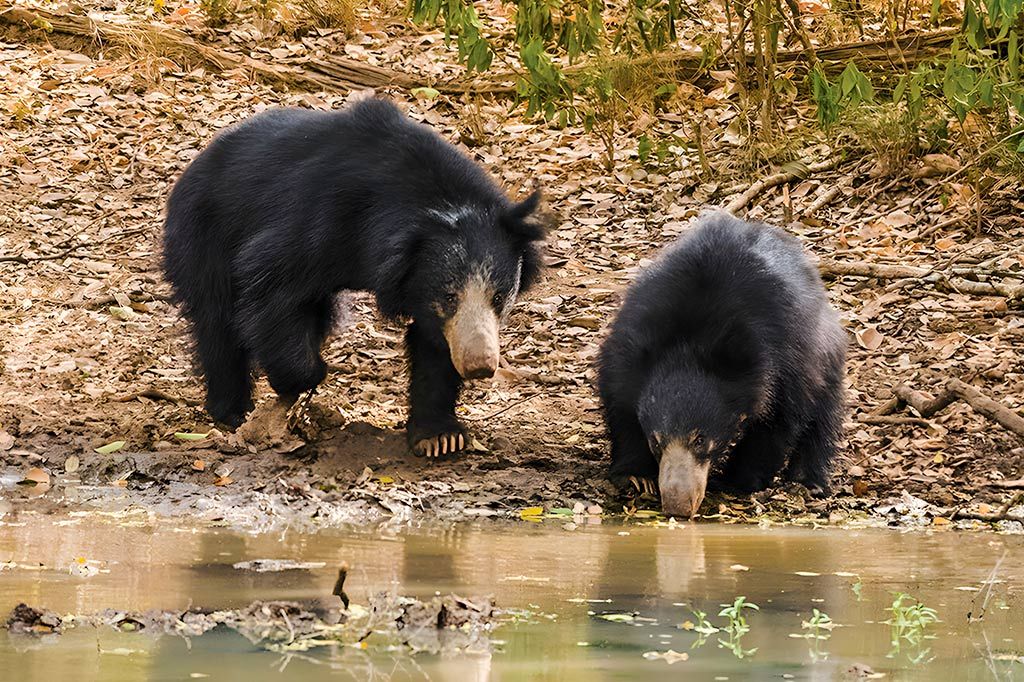
Boasting a quieter more untouched wilderness experience than a visit to Yala, Wilpattu attracts serious wildlife enthusiasts and photographers who come to spot the big game highlights of elephants, water buffalo and spotted deer.
Visit the park in July and August and you’re likely to find sloth bears feasting on the fruit of the Palu tree. And, whilst sightings are harder here, the park has a high number of resident leopards. You’ll also find Mugger crocodiles lurking in the shallows of the willus, which are richly populated by migrating waterfowl and waders, while flycatchers, eagles and owls soar above you over the jungle canopy.
Bundala National Park: Best for Wetlands & Migratory Birds
Stretching nearly 20km (12 miles) along the coastline between Kirinda and Hambantota in southern Sri Lanka, Bundala is a coastal wetland made up of lagoons, salt pans, dunes and scrub forest. It forms part of a critically important UNESCO biosphere reserve and is a birdwatcher’s paradise with over 200 species including tiny kaleidoscopic bee-eaters, vast spot-billed pelicans, powerful crested hawk eagles and iridescent flamingos.
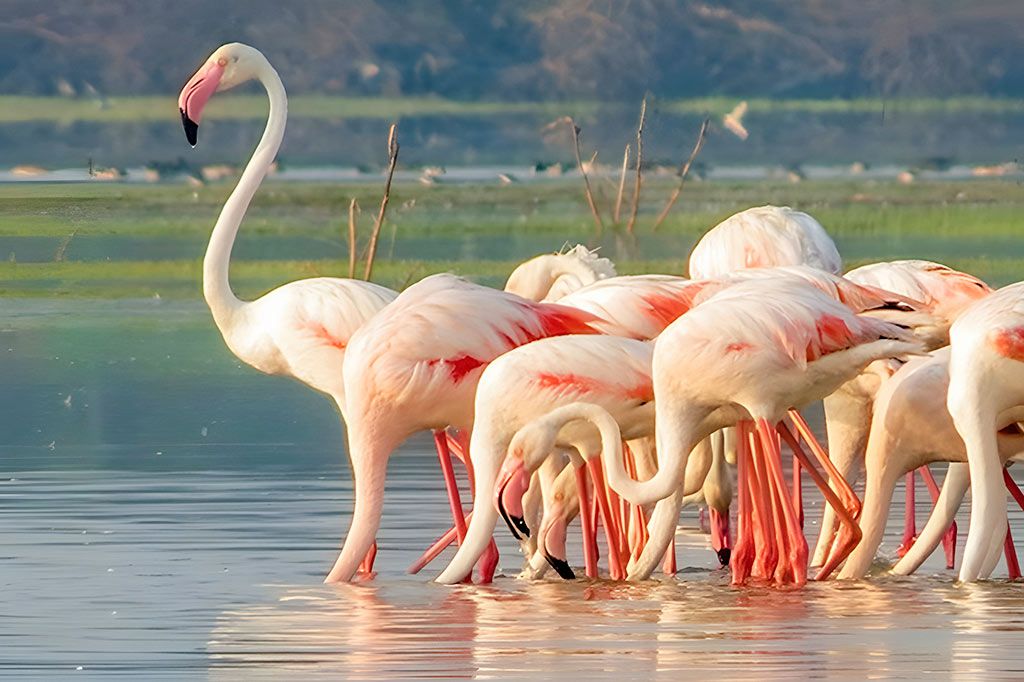
During the November – March migration season, the lagoons are teaming with life and dawn safari drives give you unrivalled views of the wetlands as they shimmer with birds silhouetted against the haze of the reflected sunrise. The flamingos are a major draw here, their rose-pink tinting the silvery lagoons and creating a moving watercolour painting as they gather in their thousands.
It’s not all about the birdlife however, elephants, mugger crocodiles, civets, giant squirrels, monitor lizards and turtles all call this park home and its diverse landscape works well on a dual park visit with nearby Yala.
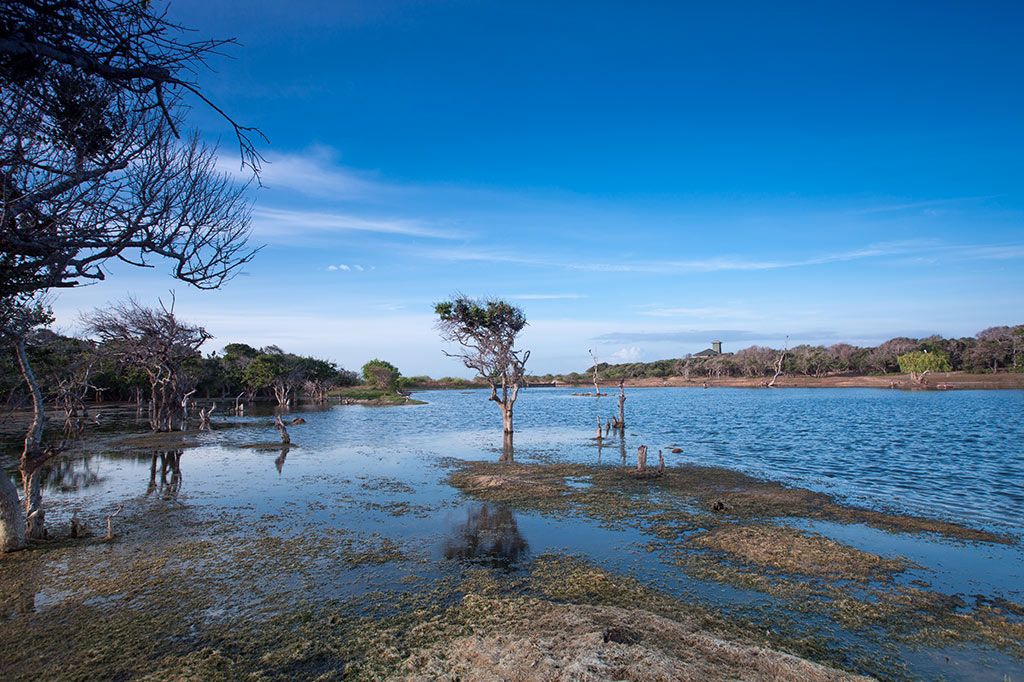
Nestled between the south coast and southern highlands, Udawalawe National Park boasts far-reaching open views across grasslands, scrub and the Udawalawe Reservoir, backed by the scenic peaks of the Balangoda mountain range. It is a consistently reliable place for watching elephants, over 500 live within the park and are often to be found in large herds near the reservoir or bathing in the river so you are almost guaranteed sightings, no matter what time of year you visit.
Water buffalo, spotted deer, sloth bear, mongoose, bandicoots and occasionally leopards are also spotted here, within a quieter and more relaxed safari experience than at nearby Yala. Udawalawe is also famed for its birdlife, with over 180 species onsite, including crested serpent eagles, kingfishers and hornbills.
Due to the consistency of the sightings, it’s a great place to visit if Asian elephants are your wildlife highlight, compounded by its proximity to the Udawalawe Elephant Transit Home, which rescues and rehabilitates orphaned elephant calves, offering ethical and educational visits.
Practical Tips
- Best Time to Spot Sri Lanka’s Wildlife:
- Yala: May – October offers the easiest game spotting, while bird season is at its best from November – April when the landscape is a lush green, sprinkled with a rainbow of wildflowers.
- Minneriya: Best visited during the July – September dry season to view the elephant gathering, the park is much quieter during the rest of the year.
- Wilpattu: June – October brings dry weather with wildlife drawn to drink at the willu, so easier to spot. During December – January it’s a quieter safari alternative to the peak tourist period at Yala.
- Bundala: Peak season for birdwatching is between December and April with the wider September – March season offering the chance to see the greater flamingo.
- Udawalawe: December – April is the dry season where the parched grasslands and need for water make spotting wildlife far easier. The shoulder season of May – September is far quieter with lusher, greener landscapes.
- What to Pack:
- Lightweight neutral-coloured clothing, layers to allow for cooler mornings and evenings, wide-brimmed hat or cap, light rain jacket, comfortable walking shoes, sunscreen and insect repellent.
- Don’t forget your wildlife viewing gear, particularly binoculars and a camera with a 200mm+ zoom lens.
- Getting Around:
- Inside the parks, you can only enter and travel around with a licensed safari jeep and driver; private vehicles, motorbikes and walking safaris are not allowed, except in certain buffer zones.
- Most lodges and hotels can arrange jeeps and guides for you with driver-guides or professional naturalists that are highly skilled at tracking wildlife and will infuse your experience with insights on animal behaviour, tracks and bird calls.
- Where to Stay
- Sri Lanka’s wildlife encounters are best experienced when accompanied with the right place to stay: a lodge that feels part of its landscape, where private safari tours can be arranged with rangers that intimately know the wildlife and the parks, where luxury meets wilderness and hospitality flows as naturally as the surrounding scenery.
- Uga Chena Huts, Yala National Park – Hidden between tropical forest and the Indian Ocean, this luxury safari retreat captures the raw drama of Yala’s landscape. Each thatched hut blends seamlessly into the dunes, with private plunge pools and interiors echoing the tones of the surrounding bush. Morning and evening game drives in the national parks of Yala (15mins away), Bundala (53 mins) or Udawalawe (2hrs) bring you face to face with leopards and elephants, while evenings begin with secret sundowners at hand-picked vantage points and end under a canopy of stars beside the oceanfront restaurant. A rare balance of wildness and indulgence.
- Uga Ulagalla, near Minneriya National Park – Set within a 150-year-old ancestral estate near Sri Lanka’s Cultural Triangle, Ulagalla offers refined eco-luxury among paddy fields, forest and lakes. Private villas with plunge pools are scattered across 58 acres of serene countryside, where cycling, kayaking and birdwatching replace the rush of daily life. Perfect for exploring Minneriya’s elephant gatherings, the wilderness of Wilpattu and the ancient cities of Anuradhapura and Polonnaruwa, it’s a haven where heritage, nature and elegance converge.


 youtube
 instagram
 share
share