

The mere mention of Sri Lanka can send even the most seasoned of birdwatchers into raptures. Why? Well, for its size, the teardrop isle punches well above its weight, boasting 35 endemic species and over 500 other species within a relatively compact area, meaning that observing a huge diversity of species is easily achievable even on a short trip.
But beyond these handy practicalities, there’s such drama and scale when it comes to birdwatching tours here. The country’s location on the Central Asian Flyway means that it welcomes thousands of migratory species from Europe and Central Asia each year, which adds spice and diversity to quests to track down enigmatic, endemic species like the Sri Lanka blue-tailed magpie. Residents and visitors mingle almost everywhere you go.
The sheer amount of water in Sri Lanka, from ancient tanks (reservoirs) to inland lagoons and coastal wetlands, means that there’s ample environments to observe intriguing waders and waterbirds, from the rare black-necked stork to white-bellied sea eagles and greater flamingos. Interwoven with this waterlogged terrain is dry, tropical scrubland, meaning you can see landbirds and other forest-dwelling varieties, as well as waterbirds, within the course of a few hours.
Here we’ve outlined the best places to birdwatch in Sri Lanka, along with the headline species to look out for in each of these ecosystems.
Birding safaris in Bundala National Park
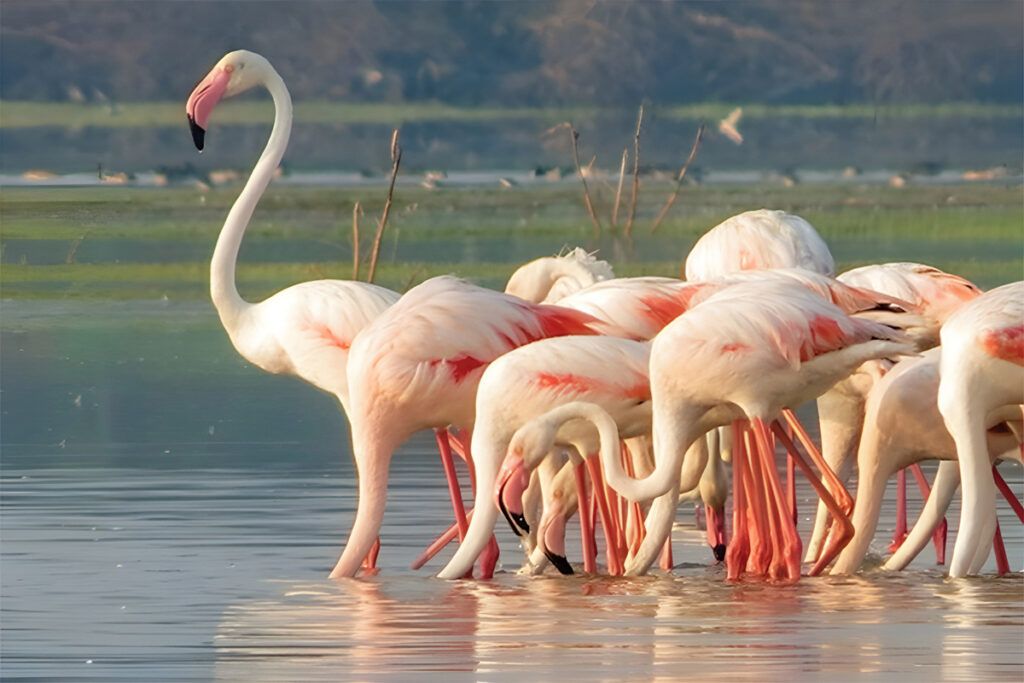 Greater flamingoes
Thousand-strong flocks of balletic greater flamingos, their rose-pink and red plumage looking as though it’s been delicately painted in watercolours. The turquoise flash of a blue-tailed bee-eater as it breaks out of scrubland, catching insects on the wing. The elegant, almost monastic-like patience of a Eurasian spoonbill as it sways its singular beak through water in the search for food. These are just some of the 200 bird species you could spot in Bundala National Park, a watery mosaic of lagoons, freshwater pools and marshland interspersed with patches of forest, salt pans and small dikes.
This protected wetland sanctuary, located on Sri Lanka’s southern coast just west of Yala National Park, is a gathering place for migratory birds, but also numbers several year-round residents. It’s a fulfilling stop on birdwatching tours of Sri Lanka: it has enough variety and rarities to entice experienced birders, but the openness and flatness of its landscape also make it accessible to total beginners or families. It’s best explored on safari by 4×4 and in the company of a local ranger (like this guided safari from Uga Chena Huts), who can help identify species, share invaluable insights into habitat and behaviour and point out some of the scrub-dwelling birds that can be harder to spot.
Kokkilai Bird Sanctuary
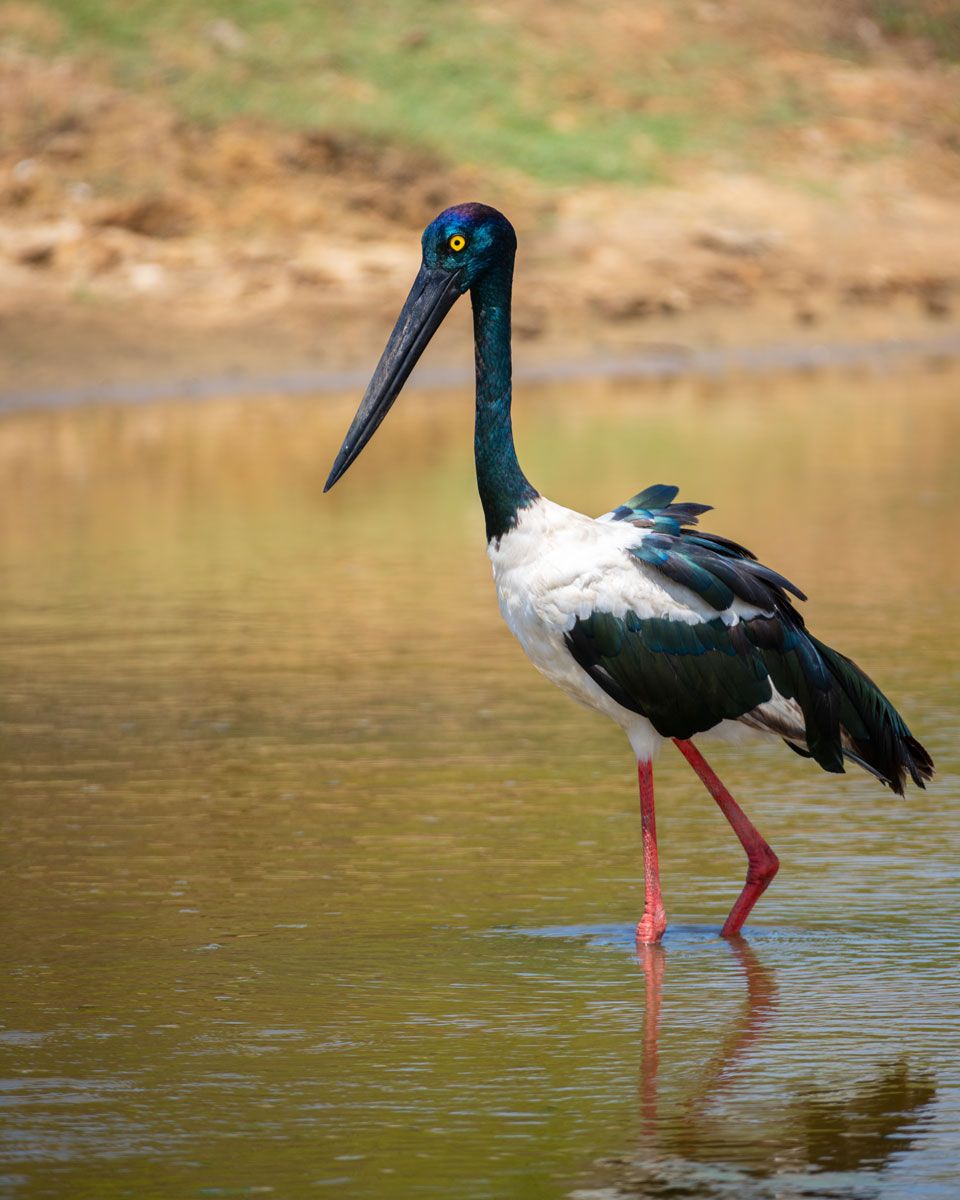
Black-necked stork
Another coastal water world, this time situated on Sri Lanka’s east coast near Trincomalee. Kokkilai Bird Sanctuary has fertile lagoons and mudflats along with mangrove forest, making it attractive to both waterbirds and wading birds. Its star species is the black-necked stork, a tall, graceful and territorial creature with a long sooty bill, tall twig legs the colour of rhubarb, and a black head that has an iridescent purple-blue shimmer.
It’s exciting to spot, not least because it’s one of Sri Lanka’s rarest birds, but also because it has an imposing presence, especially when it opens its wings to reveal its distinct rows of black-and-white feathers that look like fringing on a flamboyant costume. Its presence is also the sign of a flourishing marshland ecosystem.
While on a boat tour of Kokkilai’s main lagoon, you can look out for other long-legged relatives of the black-necked stork, including ibises, egrets and herons, while Brahminy kites can sometimes be spied soaring over the bodies of water.
Sinharaja Forest Reserve
This vast swathe of primary rainforest in southwest Sri Lanka doesn’t give up its birding treasures easily. The canopy here is so densely interwoven that the understorey is dimly lit, mists drift in and out and avifauna is often hidden high up in the trees. However, the birdwatching is top-rate, made possible by the fact that the park only allows visitors in on foot, and you must be accompanied by a local guide. Guides are skilled at spotting even the most elusive of the 140 species that call the reserve home.
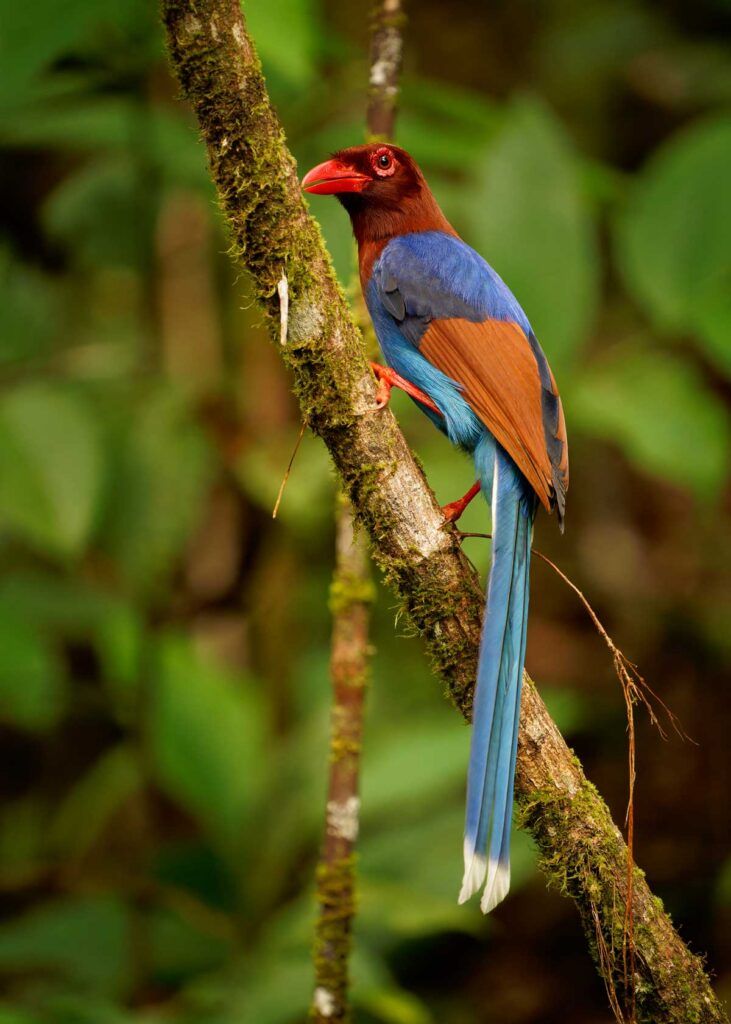 Sri Lanka blue-magpie
The birds you could tick off here come in a riot of colours, from parakeets, parrots and hornbills to the endemic Sri Lanka blue-magpie, with its shades of rust and bright lapis lazuli. It can be glimpsed flitting about the thick canopy foliage and has a clumsy flying style. Out of Sri Lanka’s 35 endemic birds, 20 can be seen here, including the red-faced malkoha, which, as the name suggests, has a striking mask of scarlet wrapped around its eyes and head.
On your visit, look out for the park’s unusual phenomenon of bird waves, huge flocks of different birds feeding and flying together.
Kumana National Park
Situated northeast of Yala National Park, Kumana encapsulates many kinds of terrain, from thick forests of wide-girthed kumbuk trees to riverbanks, mangroves and coastal lagoons, and even includes ancient, man-made water tanks. It’s this diversity that makes it so hospitable to birdlife, offering a home to over half of Sri Lanka’s 500 known species of avifauna.
Visit between April and July, and you could be treated to sightings of the elusive, black-necked stork, but pelicans, spoonbills, cormorants, kingfishers and white-bellied sea eagles (often seen in flight) also thrive here. While exploring the watery elements of the park, you’ll want to keep an eye out for grey-headed fish eagles feasting from the banks.
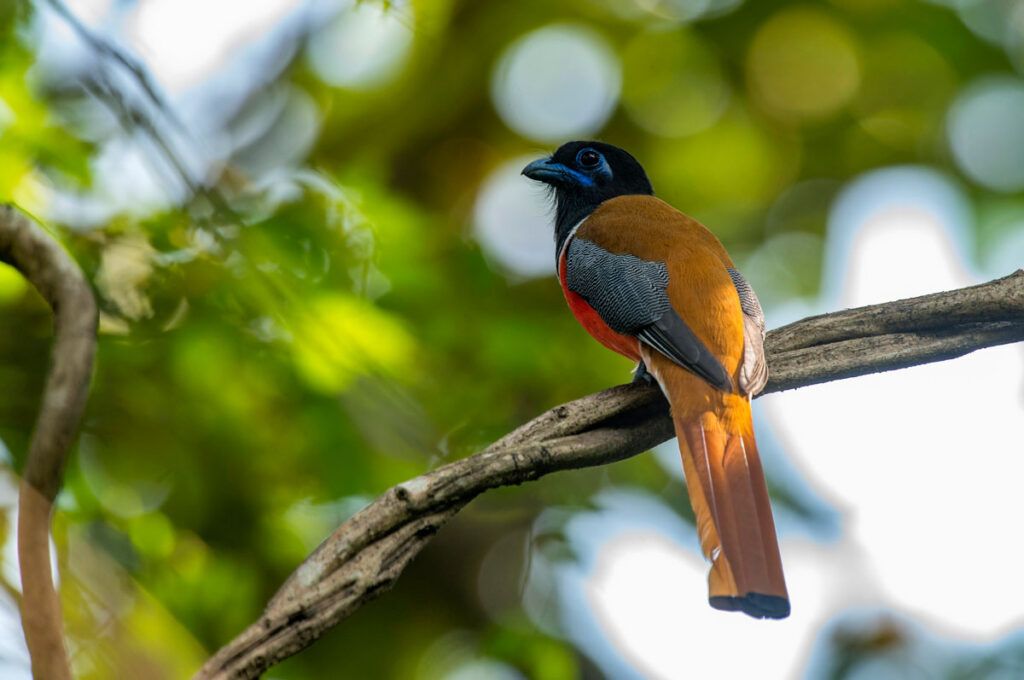 Malabar trogon
Adding colour to the mix are some of the migrant species who frequent the park’s tropical dry zones. Favourites of birding connoisseurs include the Malabar trogon, which has a blue head with tinges of teal colouring and an orangey-red body. It emits a distinctive low throaty call which can only be heard at close quarters.
Udawalawe National Park
Comprising marsh, a man-made reservoir, forest and grasslands, southern Sri Lanka’s Udawalawe is another national park that offers great variety for curious wildlife-watchers, and you can experience the best of it on a day’s game drive with a ranger. Herds of Asian elephants are the main draw, but the birdlife can be equally captivating.
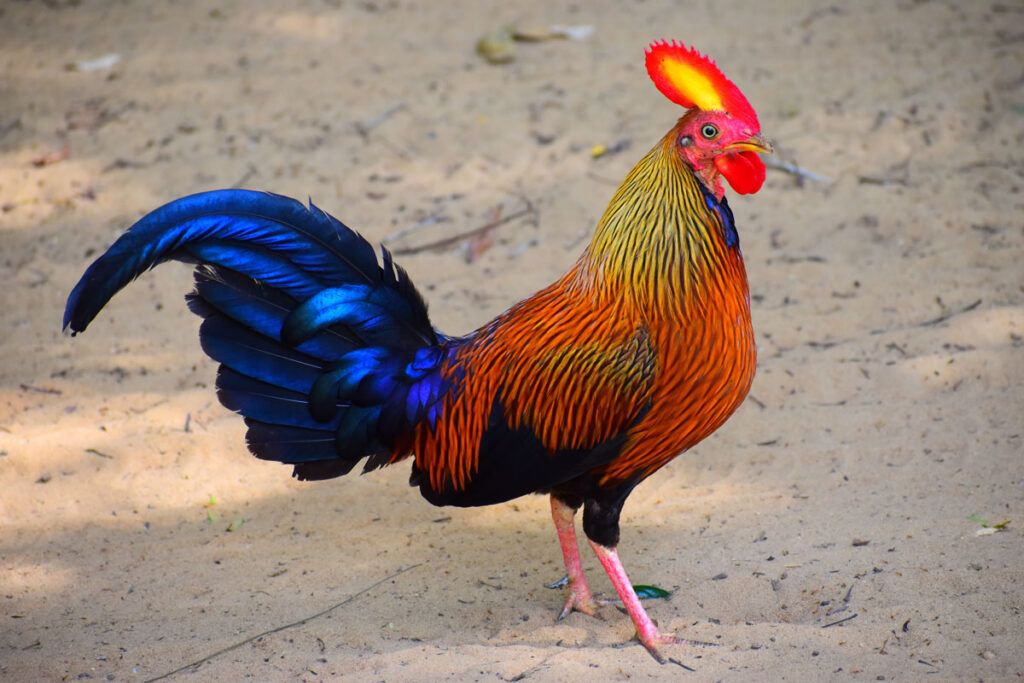 The Sri Lankan junglefowl
Being in part wetland, you can expect to see all kinds of wading birds, from egrets and ibises to spot-billed pelicans, but the park also boasts a healthy raptor population, including eagles, hawks and kestrels. You might be able to tick off several of Sri Lanka’s endemic birds, too, including malkohas and barbets. The Sri Lankan junglefowl, the country’s national bird, also haunts the forest outskirts, looking like a slightly brighter version of a cockerel.
Your guide will vary your route around the park according to what you want to see, and the time of year, for example, water levels in the reservoir are highest from November to March, often leading to increased sightings of waders and raptors.
Kalametiya Bird Sanctuary
A wetland on Sri Lanka’s southern coast, Kalametiya is one of the country’s best birding sites given its huge variety of waders, waterbirds, resident and migratory species, along with several of Sri Lanka’s less-commonly-spotted birds. Among the waterfowl and larger waders like spoonbills and ibises, you might catch sight of pheasant-tailed jacanas seeming to walk on water as they pick their way across aquatic plants just under the surface, their long tail streamers bobbing as they go.
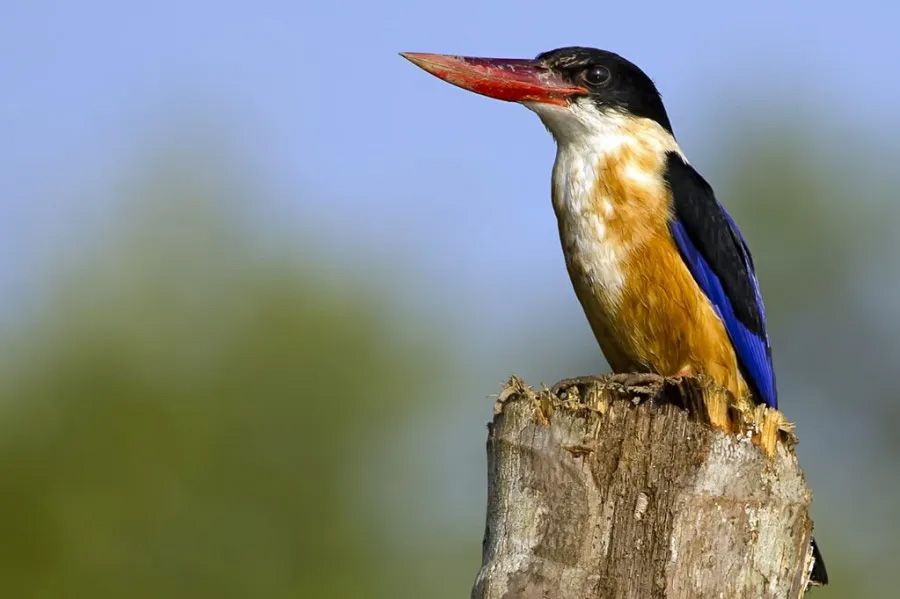 Rare black-capped kingfisher
One of the best ways to take in the full riches of the park is a guided catamaran tour, which gives you access to quieter lagoons and mangrove swamps. It’s here you might see the rare black-capped kingfisher (with its wonderfully regal purple plumage). While on the mudflats, in migration season, you can expect to see garganey ducks, terns and black-winged stilts.
Meanwhile, if you head out on foot after your boat tour, you’ll see that the park’s scrubby, grassland patches play host to kaleidoscopic insectivores like the orange-and-grey small minivet and blue-tailed bee-eater.
Practical tips for your birdwatching trip to Sri Lanka
When to go
Whenever you visit Sri Lanka, there will be plenty of opportunities to see vibrant and fascinating birdlife but if you’re planning your trip predominantly around birds, then your choice of month will depend on which species you want to see. Below is our guide to the best month for each national park:
Bundala National Park:
Best months are between September to March to see the migratory waterbirds.
Kokkilai Bird Sanctuary:
Migratory lagoon birds are at their peak here between November and March.
Sinharaja Forest Reserve:
The driest forest conditions here are between January and April allowing for optimum viewing.
Kumana National Park:
Nesting colonies reach a peak here between April and July.
Udawalawe National Park:
During the dry season between May and September you’ll see the largest concentrations of birds.
Kalametiya Bird Sanctuary:
Migratory waterbirds are best seen here between November and April.
Where to stay
Uga Chena Huts, on the edge of Yala National Park, is your gateway to Bundala National Park, and you can also use it as your base for visiting other reserves and sanctuaries, including Udawalawe National Park and Kumana National Park.
Uga Prāva, on Sri Lanka’s southern coast near Tangalle, offers easy access to Kalametiya Bird Sanctuary, while Jungle Beach an Uga Experience, on Sri Lanka’s east coast near Trincomalee, is ideally positioned for visits to Kokkilai Bird Sanctuary.
What to pack
Along with more obvious items like binoculars, camera, insect repellent and sunscreen, we advise packing leech socks for visits to rainforested national parks like Sinharaja Forest Reserve. A good birding guidebook can be helpful, along with a dry bag for boat trips.


 youtube
 instagram
 share
share